Payment in China as a Foreigner – Alipay, WeChat Pay & Cash Guide
Master mobile payments in China. Step-by-step Alipay & WeChat Pay setup for foreigners with foreign cards, Visa/Mastercard usage, cash tips, and city-by-city payment friendliness.
Payment in China as a Foreigner – Alipay, WeChat Pay & Cash Guide
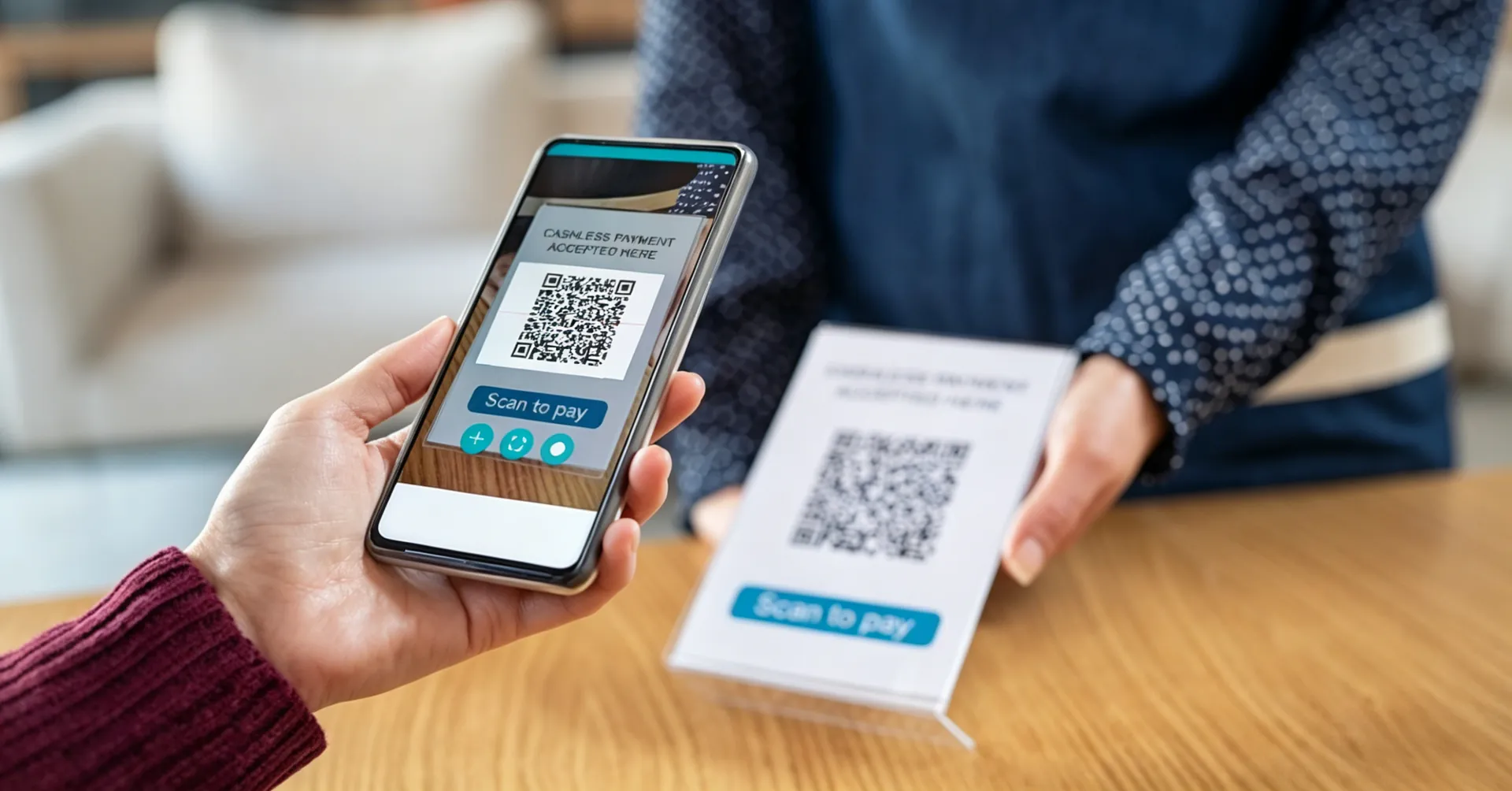
You land in China, walk up to a street food stall, and reach for your wallet. The vendor shakes her head and points at a QR code. No cash. No card terminal. Just a laminated square of black-and-white squares, and the expectation that you'll scan it with your phone.
China went cashless faster than anywhere else on Earth. For foreign travelers, this used to be a barrier. It isn't anymore. In 2026, both Alipay and WeChat Pay support international Visa, Mastercard, JCB, and Diners Club cards — no Chinese bank account required. This guide walks you through every payment scenario you'll encounter, from scanning your first QR code to knowing when to pull out cash.
Why China is a Cashless Society
Over 90% of urban transactions in China are mobile. QR codes replaced cash registers. Even temple donation boxes and street musicians display QR codes. The reasons are simple: Alipay and WeChat Pay are faster than cash, more secure than cards, and embedded in the apps everyone already uses for messaging, social media, and daily life.
For a traveler, this means you can pay for everything — taxis, train tickets, museum entry, a bowl of noodles, a bottle of water — with your phone. But you need to set it up before you arrive. Once you're inside China without a VPN, downloading apps becomes complicated. Think of this as part of your pre-trip checklist, right next to your visa.
Alipay for Tourists
Alipay (支付宝 / Zhīfùbǎo) is China's leading standalone payment app — and the most foreigner-friendly. Its English interface is polished, and it includes built-in utilities like taxi booking (DiDi integrated), train ticket purchases, and real-time translation.
How to Download and Register
| Step | Action |
|---|---|
| 1. Download | App Store (iOS) or Google Play (Android) → search "Alipay". The icon is a blue square with the white character "支". Developer: "Alipay (Hangzhou) Technology Co., Ltd." |
| 2. Register | Open the app → "Sign Up" → select your country code → enter your foreign mobile number (+1 for US, +44 for UK, etc.). Alipay sends an SMS code. Enter it. |
| 3. Switch Language | Tap Me (bottom right) → Settings (gear icon, top right) → Language → English. The app restarts in English. |

Step-by-Step: Link a Foreign Credit Card
This is the single most important setup step. Without it, Alipay is just an app on your phone.
| Step | Action |
|---|---|
| 1. Verify Identity | Tap Me → tap your profile area → Account → Verify Now. Select "Foreign Passport" → photograph your passport information page → complete facial recognition (blink or nod as prompted). This is mandatory under Chinese financial regulations. Processing is usually instant. |
| 2. Add Card | Me → Bank Cards → Add Card (tap the "+" icon). Enter your Visa, Mastercard, JCB, or Diners Club number, expiry date, and CVV. |
| 3. Verify with Bank | Your card-issuing bank sends an SMS or app notification for approval. Alipay may make a micro-charge (¥0.01–1.00) that is refunded immediately. |
| 4. Test | Once your card appears under "My Bank Cards," make a ¥5–10 test purchase at a convenience store or chain coffee shop. If it works, you're fully operational. |

Where Alipay Works
Alipay is accepted virtually everywhere: restaurants, street food stalls, taxis (via DiDi integration), supermarkets, convenience stores, metro ticket machines (in most cities), tourist attractions, hotels, and even rural guesthouses. If a business accepts any form of QR payment, it accepts Alipay.

Transaction Limits & Fees (Foreign Cards)
| Detail | Amount / Policy |
|---|---|
| Single transaction limit | ~¥5,000–6,500 (varies by card issuer) |
| Annual limit | ~$50,000 equivalent (Chinese forex regulations) |
| Fees | 3% for transactions above ¥200; under ¥200 is typically feeless |
WeChat Pay for Foreigners
WeChat (微信 / Wēixìn) is China's "everything app" — messaging, social media, payments, mini-programs, and news. WeChat Pay lives inside the WeChat app, and because virtually every Chinese person uses WeChat for communication, having WeChat Pay means you can also pay your guide, split restaurant bills with locals, and send Red Packets during holidays.
WeChat Pay Setup Guide with Foreign Card
| Step | Action |
|---|---|
| 1. Download & Register | App Store / Google Play → "WeChat" (green icon, two white speech bubbles) → Sign Up → enter your foreign mobile number. WeChat may require an existing user to scan a QR code to verify your account (anti-spam measure). Ask any friend who uses WeChat — it takes 5 seconds. |
| 2. Activate WeChat Pay | Me → Services → Wallet. Tap "Add a Card" or "Verify Identity." Upload your passport → complete facial recognition. Processing may take 1–3 business days (WeChat is stricter than Alipay for foreign verification). |
| 3. Add Foreign Card | After verification: Me → Services → Wallet → Cards → Add a Card. Enter your Visa, Mastercard, JCB, or Diners Club details. Verify via bank SMS. Set a 6-digit payment PIN (NOT your phone unlock code). |
| 4. Find Payment Entry | Tap the "+" icon (top right of Chats screen) → "Money" (or "WeChat Pay"). From here: Scan (scan merchant QR codes), Pay (show your barcode to cashiers), Transfer (send money to individuals), Red Packet (festive money gifts). |


Key Differences: Alipay vs WeChat Pay
| Feature | Alipay | WeChat Pay |
|---|---|---|
| Ease of Setup | ★★★★★ (usually instant verification) | ★★★☆☆ (may take 1–3 days for manual review) |
| English Interface Quality | ★★★★★ (polished, consistent) | ★★★☆☆ (terminology varies by version) |
| Built-in Travel Tools | Yes — taxi, train tickets, translation | Limited — relies on mini-programs |
| Social Integration | None | WeChat is China's primary messaging app |
| Transaction Fees (Foreign Cards) | 3% above ¥200 | 3% above ¥200 (waived below ¥200) |
| Transfers to Individuals | Yes | Yes |
| Red Packets | Yes | Yes (more commonly used) |
Common Problems and Fixes
| Problem | Likely Cause | Solution |
|---|---|---|
| Transaction declined | Card issuer blocked it | Call your bank; ask them to whitelist Chinese platforms |
| "Account restricted" | ID verification incomplete | Re-verify: Me → Services → Wallet → Identity Info |
| Verification stuck in review | WeChat manual review backlog | Wait 1–3 days; use Alipay in the meantime |
| Can't find payment menu | Interface varies by region | Tap "+" (top right of Chats) → "Money" |
| Red Packet feature missing | Foreign cards don't support Red Packets | This is a known limitation — use Alipay Red Packets instead |

Can I Use Visa/Mastercard in China?
Short answer: Yes, but only in limited settings. Do NOT rely on your physical credit card as your primary payment method.
Where Foreign Cards Work
| Setting | Acceptance | Notes |
|---|---|---|
| International chain hotels (Marriott, Hilton, IHG, Hyatt) | ✅ Yes | Reliably accept Visa/MC; some also take AMEX |
| High-end restaurants in major cities | ⚠️ Sometimes | Hotels and Michelin-starred restaurants generally yes; local restaurants almost never |
| Major airports (PEK, PVG, CAN, etc.) | ✅ Yes | Duty-free shops and international restaurants inside airports |
| Shopping malls (luxury brands) | ⚠️ Sometimes | International luxury brands often accept foreign cards; local retailers do not |
| Street stalls, taxis, local shops, metro | ❌ No | QR code or cash only |
ATMs That Accept Foreign Cards
Look for ATMs at Bank of China (中国银行), ICBC (工商银行), or China Construction Bank (建设银行). These reliably accept Visa, Mastercard, and Cirrus/Maestro cards. Withdrawal limits are typically ¥2,000–5,000 per transaction, with a ¥20–30 fee per withdrawal.
UnionPay vs Visa/Mastercard Coverage
| UnionPay | Visa / Mastercard | |
|---|---|---|
| Domestic coverage | Universal (every terminal, every ATM) | Very limited (hotels, airports, luxury retail) |
| Foreigner setup | Requires a Chinese bank account or specialized UnionPay card issued abroad | Can be linked to Alipay/WeChat Pay as a foreign card |
| Recommendation for travelers | Not practical as a primary method — you need a mainland bank account | Use within Alipay/WeChat Pay, not as a standalone physical card |
Cash in China – Still Useful?
Cash is legal tender everywhere in China — but in practice, it's increasingly inconvenient. Many vendors genuinely have no change for a ¥100 note. That said, cash still has its place.
Where to Exchange Currency
| Method | Rate | Convenience |
|---|---|---|
| Your home bank (before departure) | Best rate, no fees at some banks | Order RMB 3–5 days in advance |
| Airport exchange counters | Worst rate | Convenient but expensive — exchange ¥200 maximum here |
| Bank of China branches | Good rate, small fee | Bring your passport; weekday mornings are fastest |
| Hotel front desk | Moderate rate | Convenient for small amounts |
| ATMs (foreign card) | Mid-market rate + ¥20–30 fee | Most convenient for topping up; use ICBC or Bank of China ATMs |
Daily Cash Budget Recommendations
| Travel Style | Cash per Day (RMB) | What It Covers |
|---|---|---|
| Primarily using Alipay/WeChat | ¥200–300 | Backup for elderly vendors, rural areas, small markets |
| Mixed cash + digital | ¥400–600 | Some meals at small restaurants, local markets, taxis |
| Cash only | ¥600–1,000+ | All meals, transport, attractions, shopping — not recommended |
City-by-City Payment Friendliness
Payment experiences vary by city. Tier-1 cities are near-cashless; smaller cities and rural destinations still see more cash and physical card usage.
| City | Foreign Card Acceptance | Recommended Payment Method |
|---|---|---|
| Beijing | ⭐⭐⭐ (hotels, major restaurants, airports) | Alipay/WeChat + ¥300 cash backup |
| Shanghai | ⭐⭐⭐⭐ (best foreign card coverage in China) | Alipay/WeChat + ¥200 cash backup |
| Guangzhou | ⭐⭐⭐ (Canton Fair area is card-friendly) | Alipay/WeChat + ¥300 cash backup |
| Chengdu | ⭐⭐ (hotels only; street food is QR-only) | Alipay/WeChat + ¥400 cash backup |
| Xi'an | ⭐⭐ (tourist zone hotels accept cards) | Alipay/WeChat + ¥400 cash backup |
| Guilin | ⭐ (cards nearly useless outside 5-star hotels) | Alipay/WeChat + ¥500 cash backup |
| Chongqing | ⭐⭐ (international hotels accept cards) | Alipay/WeChat + ¥400 cash backup |
| Shenzhen | ⭐⭐⭐ (tech-forward; foreigner-friendly) | Alipay/WeChat + ¥200 cash backup |
| Hangzhou | ⭐⭐⭐ (Alipay's hometown – digital-first) | Alipay/WeChat + ¥300 cash backup |
| Kunming | ⭐ (rural vendors strongly prefer cash) | Alipay/WeChat + ¥500 cash backup |
| Qingdao | ⭐⭐ (beer street stalls are QR or cash) | Alipay/WeChat + ¥400 cash backup |
| Harbin | ⭐⭐ (hotels and Russian restaurants take cards) | Alipay/WeChat + ¥500 cash backup |
| Xiamen | ⭐⭐⭐ (Gulangyu tourist shops accept cards) | Alipay/WeChat + ¥300 cash backup |
| Suzhou | ⭐⭐ (gardens accept QR; cash for water town vendors) | Alipay/WeChat + ¥400 cash backup |
| Nanjing | ⭐⭐ (tourist sites accept QR; hotels take cards) | Alipay/WeChat + ¥400 cash backup |
| Zhuhai | ⭐⭐⭐ (modern, near Macau, card-friendly) | Alipay/WeChat + ¥200 cash backup |
Planning your trip? Estimate total costs with our Budget Calculator →
Frequently Asked Questions
Can I use my foreign credit card in China?
Yes, but indirectly. Link your Visa, Mastercard, JCB, or Diners Club card to Alipay or WeChat Pay, then use those apps to pay everywhere. Physical card acceptance is limited to international hotels, upscale restaurants, and airports. Do NOT rely on swiping your physical card.
How do I set up Alipay as a foreigner?
Download Alipay from your app store → register with your foreign mobile number → switch language to English → verify your identity with your passport → add your international card under "Bank Cards." The process takes about 15 minutes. Identity verification is usually instant. See the step-by-step section above for detailed instructions.
Do I need a Chinese bank account to use WeChat Pay?
No. As of 2026, you can link an international Visa, Mastercard, JCB, or Diners Club card directly to WeChat Pay. You need to complete passport-based identity verification first. Note that some advanced features (investments, certain mini-programs) do require a Chinese bank account, but core payment functions — scanning to pay, showing your barcode, and transferring money — all work with foreign cards.
Is cash still accepted in China?
Yes. Chinese law requires all businesses to accept cash. In practice, many vendors have no change, and some may refuse large bills. Always carry ¥200–500 in small bills (¥10, ¥20, ¥50) as backup, especially in rural areas, small markets, and when dealing with elderly vendors.
Can I use Apple Pay in China?
Apple Pay technically works in China, but only with UnionPay cards — which require a Chinese bank account. For foreign travelers, Apple Pay is not a viable payment method. Stick with Alipay and WeChat Pay.
What if my transaction is declined?
The most common cause is your card issuer's fraud detection flagging an unfamiliar Chinese payment platform. Call your bank before traveling and tell them you'll be in China using Alipay and WeChat Pay. Also: check that you haven't exceeded the single-transaction limit (~¥5,000–6,500 for foreign cards). If all else fails, try splitting the payment into smaller amounts or using cash.
Internal Links
City guides:
- Beijing · Shanghai · Guangzhou · Chengdu · Xi'an · Guilin · Chongqing · Shenzhen · Hangzhou · Kunming · Qingdao · Harbin · Xiamen · Suzhou · Nanjing · Zhuhai
Essential guides:
- China Tourist Visa Guide 2026
- China Visa Policy & Application Guide
- Essential China Travel Tips
- China Overview – Fast Facts
Your Cashless China Trip Starts Now
Download Alipay. Download WeChat. Register. Add your card. Make a test payment. All of this takes 30 minutes before your flight — and transforms every transaction in China from a potential headache into a two-second scan. The street food vendor with the laminated QR code won't wait. Neither should you.
How was your China payment experience?
Did Alipay or WeChat Pay work smoothly with your foreign card? Did you run into transaction limits or verification delays? Share your story in the comments — your tip could save the next traveler from standing hungry at a noodle stall with a useless credit card. Also, check our visa guide and city guides before you travel.
Next Steps for Your Trip
Now that you've sorted out payments, here are the other essentials:
- Visa Guide — Check if you need a visa and how to apply
- Internet & SIM Guide — Stay connected without a VPN headache
- Language Guide — Essential Chinese phrases for travelers
- Beijing Travel Guide — Your first stop in China
- Shanghai Travel Guide — China's most international city
Ready to plan your route? See our Complete Route Planner.
Continue Reading
Essential China Travel Tips 2026: Internet, Payment, Transport & Safety
Everything you need to know before traveling to China — VPN setup, mobile payments, high-speed trains, safety tips, packing checklist, and more. A practical guide for first-time visitors.
China Transportation Guide: High-Speed Trains, Flights, Metro & Getting Around
Complete China transportation guide for foreign visitors — how to book high-speed trains, navigate the metro, use DiDi, take domestic flights, and get from airport to city. Tips for 12306, luggage limits, and surviving Chinese New Year travel rush.
China Tourist Visa 2026 – Complete Guide for Foreigners
Step-by-step China visa guide for 2026. Check visa-free countries, apply for an L visa, use the 144-hour transit policy, and see the latest fees and documents required.
Get China Payment Updates
Payment rules change fast in China. Get updates on Alipay, WeChat Pay, and new foreigner-friendly features.
Plus: Free China Travel Checklist
No spam. Unsubscribe anytime.