China Transportation Guide: High-Speed Trains, Flights, Metro & Getting Around
Complete China transportation guide for foreign visitors — how to book high-speed trains, navigate the metro, use DiDi, take domestic flights, and get from airport to city. Tips for 12306, luggage limits, and surviving Chinese New Year travel rush.
China Transportation Guide — Getting Around the Middle Kingdom
China's transportation network is the most extensive and modern in the developing world. Over 45,000 km of high-speed rail criss-cross the country, 250+ airports connect every province, and 45+ cities have metro systems. Getting from Beijing to Shanghai takes 4.5 hours by train — the same journey by car takes 12 hours.
This guide covers everything you need to know: booking trains, navigating metro systems, ride-hailing, domestic flights, long-distance buses, ferries — and how to survive Spring Festival (春运), the world's largest annual human migration.
🚄 High-Speed Trains — The Best Way to Travel China
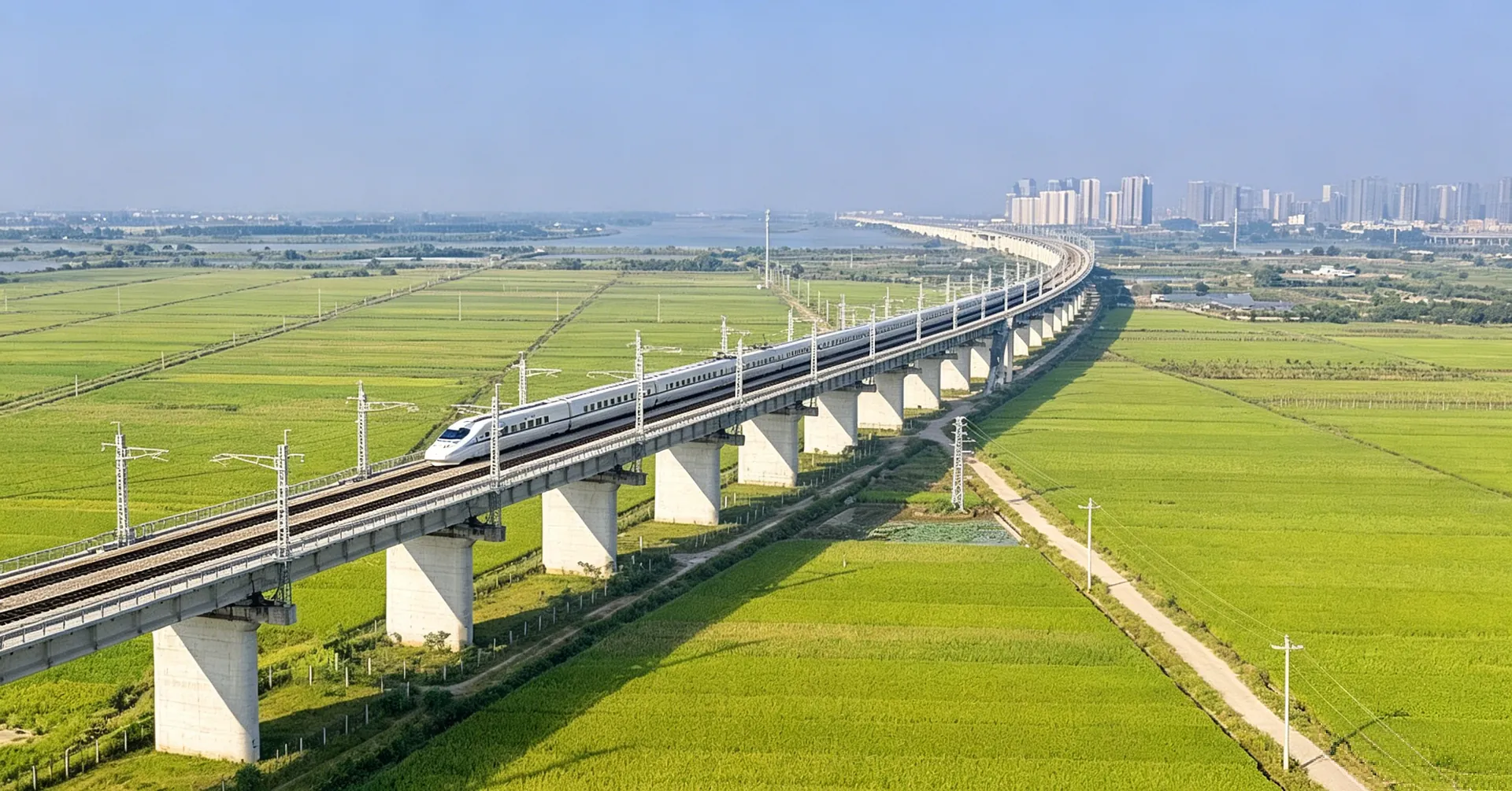
China's high-speed rail network (高铁 / gāotiě) is the world's largest at 45,000+ km and growing. Trains run at 300-350 km/h, are clean, punctual, and far more pleasant than domestic flights for journeys under 1,000 km.
Train Types
| Train | Code | Max Speed | Best For | Example Routes |
|---|---|---|---|---|
| G-Series (高速) | G | 300-350 km/h | Long-distance city pairs | Beijing–Shanghai (4.5h), Xi'an–Chengdu (3.5h) |
| D-Series (动车) | D | 200-250 km/h | Medium-distance | Chengdu–Chongqing (1.5h), Kunming–Dali (2h) |
| C-Series (城际) | C | 200-350 km/h | Short intercity | Shanghai–Hangzhou (1h), Guangzhou–Shenzhen (30min) |
| K/T/Z Series (普速) | K/T/Z | 80-160 km/h | Budget / scenic | Overnight sleeper trains, high-speed alternative |
How to Book
| Method | Pros | Cons | Best For |
|---|---|---|---|
| Railway 12306 (official) | No service fee, best seat selection | Chinese-only interface, complex registration | Frequent users, tech-savvy |
| Trip.com (formerly Ctrip) | English interface, foreign card OK | Small service fee (¥5-15) | Most foreign travelers |
| Station counter | In-person, no tech needed | Queues, limited English | Walk-up same-day travel |
Seat Classes
| Class | Price vs 2nd | What to Expect |
|---|---|---|
| Second Class (二等座) | Base price | 3+2 seats per row, comfortable, power outlets |
| First Class (一等座) | ~1.6x | 2+2 seats, more legroom, complimentary water |
| Business Class (商务座) | ~3x | Lie-flat seats, lounge access, meal service |
Boarding & Luggage
- Arrive 30-45 min early for security screening
- Gates close 5 minutes before departure (strict!)
- Luggage limit: 20kg in second/first class, 30kg in business class
- Checked luggage: no separate system — bring everything aboard
- Oversized luggage can be stored in designated racks at carriage ends
Overnight Sleeper Trains
For budget travel on longer routes, D-series sleeper trains (动卧) offer an experience that's equal parts practical and memorable. Beds are comfortable, sheets are clean (freshly sealed in plastic), and the gentle rocking puts you to sleep.
| Route | Duration | Price (sleeper) | Notes |
|---|---|---|---|
| Beijing–Shanghai (overnight D) | 11-12h | ~¥500-700 | Less popular now that G-series takes 4.5h |
| Xi'an–Guilin (D sleeper) | 10h | ~¥400-600 | Scenic, saves hotel cost |
| Chengdu–Kunming (D sleeper) | 7h | ~¥300-500 | Mountain views in the morning |
| Beijing–Xi'an (Z sleeper) | 12h | ~¥250-400 | Classic overnight option |
✈️ Domestic Flights
For routes over 1,000 km (Beijing–Guangzhou, Chengdu–Shanghai, Xi'an–Shenzhen), flying can save significant time. China's four major airlines — Air China, China Southern, China Eastern, and Hainan Airlines — plus dozens of budget carriers, connect 250+ airports.
| Platform | Notes |
|---|---|
| Trip.com | Best for foreigners: English interface, foreign card support, 24/7 customer service |
| Fliggy (飞猪) | Alibaba's travel platform; competitive pricing, Chinese interface |
| Direct airline websites | Some have English versions (Air China, China Southern) |
Airport Transit Times
| City | Airport | To City Center | Best Method |
|---|---|---|---|
| Beijing | PEK (Capital) | 30-60 min | Airport Express (¥25, 25 min to Dongzhimen) |
| Beijing | PKX (Daxing) | 45-60 min | Daxing Express (¥35, 20 min to Caoqiao) |
| Shanghai | PVG (Pudong) | 45-60 min | Maglev (¥50, 8 min to Longyang Road) |
| Shanghai | SHA (Hongqiao) | 25-40 min | Metro Line 2 or 10 (¥5-7) |
| Guangzhou | CAN (Baiyun) | 35-50 min | Metro Line 3 (¥7-10) |
| Chengdu | TFU (Tianfu) | 50-60 min | Metro Line 18 (¥10) |
| Shenzhen | SZX (Bao'an) | 35-50 min | Metro Line 11 (¥8) |
| Xi'an | XIY (Xianyang) | 50-60 min | Metro Line 14 (¥8) |
🚇 Metro Systems
45+ Chinese cities now have metro systems. The largest — Beijing (27 lines), Shanghai (20 lines), Guangzhou (18 lines), Chengdu (13 lines), Shenzhen (16 lines) — rival or exceed any subway in the world in coverage, cleanliness, and efficiency.
How to Use
| Method | How It Works |
|---|---|
| Alipay Transport | Open Alipay → Transport → Scan QR code at gate (works in 50+ cities) |
| WeChat Metro Mini-program | Open WeChat → Search city name + "metro" → Scan QR |
| Physical ticket machine | Touchscreen interface (often has English button) → Cash or WeChat/Alipay |
| Transport card (交通卡) | Buy at station kiosk (¥20 deposit + top-up) — tap on/off |
Metro Etiquette
- Stand on the right side of escalators (left for passing)
- Priority seats (老弱病残孕) near doors — free for elderly, pregnant women, etc.
- No food or drink on trains in most cities
- Security check at every station entrance (bags go through X-ray)
🚗 Ride-Hailing & Taxis
DiDi — The Uber of China
DiDi (滴滴出行) is China's dominant ride-hailing platform, available in 400+ cities. It's cheaper than taxis, more reliable, and has an English interface.
| Option | Description | Price Range |
|---|---|---|
| Express (快车) | Standard sedan, 5-min wait | ¥10-30 within cities |
| Premier (专车) | Premium sedan, better cars | ¥20-60 |
| Taxi (出租车) | Regular taxi booked via DiDi | ¥10-40 |
| Hitch (顺风车) | Carpool, longer wait | ¥5-15 |
Taxis
Flag-fall prices start at ¥8-14 depending on the city, with ¥2-3 per additional kilometre. Taxis from airport to city centre typically cost ¥80-150. Most taxi drivers speak zero English — always have your destination written in Chinese characters.
🚌 Long-Distance Buses
For destinations not served by rail (certain rural areas, minority villages, remote national parks), long-distance buses are the backup option. They're cheaper than trains but slower, less comfortable, and more prone to delays.
| Scenario | When to Use |
|---|---|
| Remote villages | Bus is the only option |
| Budget travel | 30-50% cheaper than train |
| Scenic routes | Some mountain roads are spectacular |
Booking: Trip.com, station counter, or hotel concierge. Chinese-only at most stations.
🚲 Bikes & Scooters
Shared bikes are ubiquitous in Chinese cities. Blue (Hello Bike), yellow (Meituan), and green (Qingju) bikes can be unlocked by scanning a QR code with Alipay or WeChat. Cost: ¥1-3 per ride. Parking: use designated white-line zones — parking outside them incurs a ¥5 penalty.
Electric scooters are not available for tourist rental in most cities (unlike Southeast Asia). The exception is Yangshuo and some Yunnan towns where e-scooter rental shops cater to tourists.
🚢 Ferries
| Route | Duration | Notes |
|---|---|---|
| Hong Kong–Macau | 1h | TurboJET, frequent departures |
| Hong Kong–Zhuhai–Macau Bridge | 45 min by bus | The world's longest sea bridge (55 km) |
| Guilin–Yangshuo (Li River) | 4-5h | Scenic cruise, not a commuter ferry |
| Chongqing–Yichang (Yangtze) | 3 days | Three Gorges cruise |
| Xiamen–Gulangyu Island | 5 min | Commuter ferry, ¥8 |
| Qingdao–Huangdao | 15-30 min | Cross-bay ferry |
🎋 Seasonal Travel Tips
Spring Festival (春运) — The World's Largest Migration
The 40-day period around Chinese New Year (late Jan to mid-Feb) sees 3+ billion passenger trips. Trains sell out within minutes of release. Plan ahead:
- Book train tickets the minute they release (15 days before departure)
- Avoid traveling 7 days before and 7 days after Chinese New Year's Day if possible
- If you must travel during 春运, book flights instead (less competition)
- Airports and stations are chaotic — arrive 2 hours early for trains, 3 for flights
Golden Weeks
| Holiday | Dates | Travel Impact |
|---|---|---|
| Chinese New Year | Late Jan–Feb | Peak — stations and airports overloaded for 2 weeks |
| Qingming Festival | Apr 4-6 | Moderate — regional travel spikes |
| May Day (Labor Day) | May 1-5 | Heavy — popular tourist destinations packed |
| National Day | Oct 1-7 | Extreme — the busiest travel week of the year; book everything months ahead |
📱 Essential Transport Apps
| App | Use | Notes |
|---|---|---|
| Trip.com | Book trains, flights, buses | English interface, foreign card OK |
| Railway 12306 | Official train booking | Chinese interface, no service fees |
| DiDi | Ride-hailing | English mode available |
| MetroMan | Metro route planning | Offline maps for 40+ cities |
| Apple Maps | Walking & metro navigation | Actually works well in China |
| Baidu Maps | Street-level navigation | Chinese only but very accurate |
| Amap (高德地图) | Turn-by-turn GPS | Popular with locals, Chinese interface |
🔗 Related
Info: Visa Guide · Travel Tips · Internet Guide · Language Guide Routes: Golden Route · By Duration · By Gateway Cities: View all city guides
Navigating China's transport network
What's your biggest question about getting around China — booking trains, using DiDi, or navigating the metro?
Continue Reading
Essential China Travel Tips 2026: Internet, Payment, Transport & Safety
Everything you need to know before traveling to China — VPN setup, mobile payments, high-speed trains, safety tips, packing checklist, and more. A practical guide for first-time visitors.
China Tourist Visa 2026 – Complete Guide for Foreigners
Step-by-step China visa guide for 2026. Check visa-free countries, apply for an L visa, use the 144-hour transit policy, and see the latest fees and documents required.
Payment in China as a Foreigner – Alipay, WeChat Pay & Cash Guide
Master mobile payments in China. Step-by-step Alipay & WeChat Pay setup for foreigners with foreign cards, Visa/Mastercard usage, cash tips, and city-by-city payment friendliness.
Get Weekly China Travel Tips
Join our newsletter for destination guides, travel hacks, visa updates, and insider recommendations delivered to your inbox.
No spam. Unsubscribe anytime.