Huangshan — The Mountain That Defined Chinese Landscape Painting
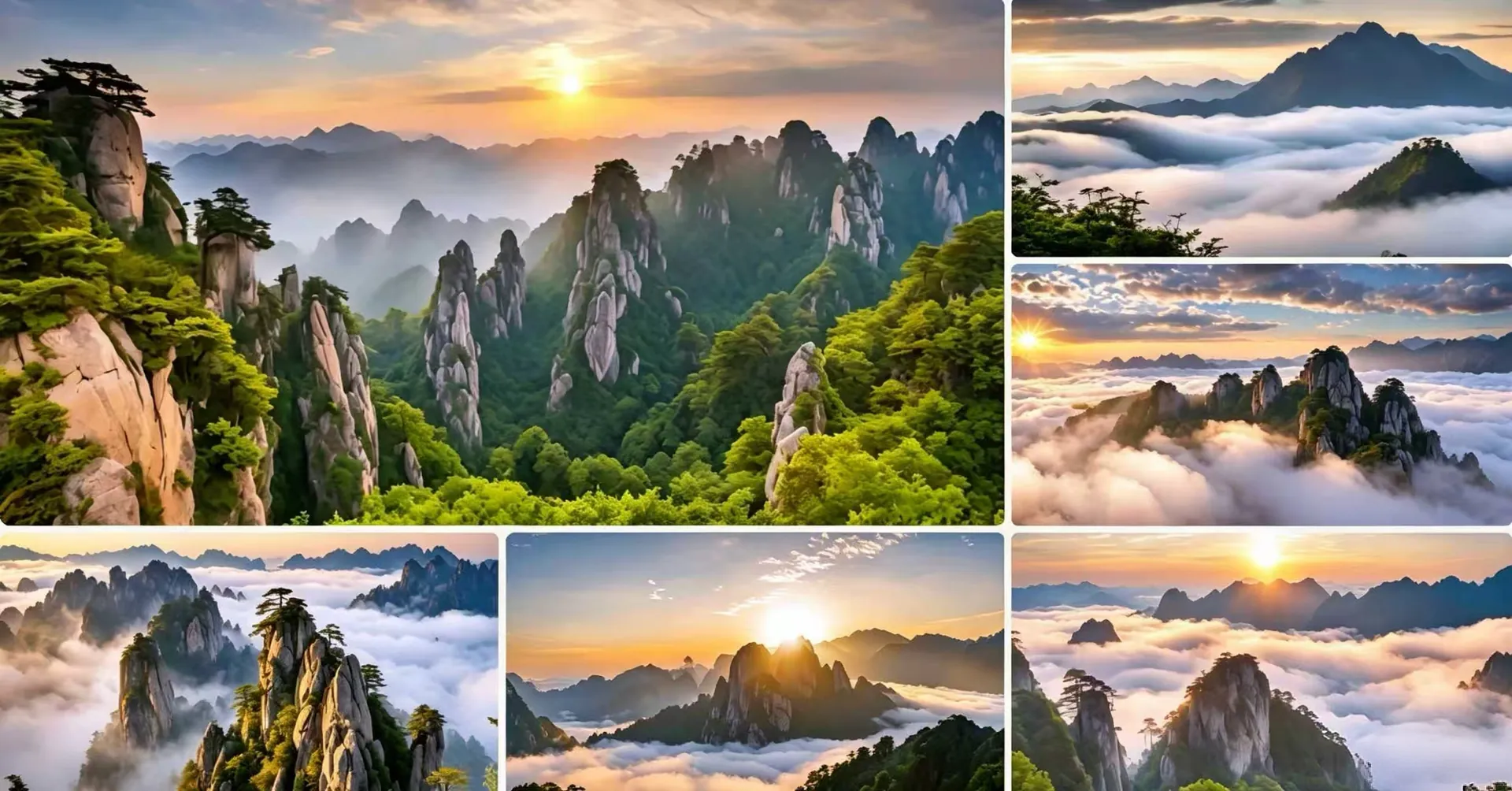
For over 1,200 years, the mist-wreathed granite pinnacles of Huangshan have been the ultimate subject of Chinese landscape painting. The mountain's name means "Yellow Mountain" — a reference to the yellow-robed mythical emperor Xuanyuan who was said to have ascended to immortality here. Its 72 peaks, ancient pine trees twisted by altitude into impossible shapes, and oceans of clouds that fill the valleys below have inspired poets, painters, and pilgrims since the Tang Dynasty.
The Chinese saying goes: "Once you've seen the Five Sacred Mountains, you needn't see any other mountain; once you've seen Huangshan, you needn't see the Five Sacred Mountains." The mountain is a UNESCO World Heritage Site and remains the most iconic natural landscape in all of Chinese cultural history.
📍 Where is Huangshan?
Huangshan is located in southern Anhui Province, approximately 5 hours by high-speed rail from Shanghai or 3.5 hours from Hangzhou. The mountain itself is about 1 hour by bus from Huangshan city (Tunxi District).
| to City | Transport | Time |
|---|---|---|
| Shanghai | High-speed rail | 2.5h |
| Hangzhou | High-speed rail | 1.5h |
| Nanjing | High-speed rail | 1.5h |
| Beijing | Flight | 2.5h |
See routes including Huangshan →
🌤️ When to Visit — Month by Month
| Month | Temp (summit) | Rain | Crowd | Rating | Tips |
|---|---|---|---|---|---|
| Jan | -6~2°C | Low | Low | ★★ | Snow on peaks. Beautiful |
| Feb | -4~4°C | Low | Low | ★★★ | Snow + rime ice |
| Mar | 0~8°C | Medium | Medium | ★★★ | Spring mist |
| Apr | 5~15°C | Medium | High | ★★★★★ | Blossoms. Perfect |
| May | 10~20°C | Medium | High | ★★★★ | Warm. May holiday |
| Jun | 14~24°C | High | Medium | ★★★ | Rainy season |
| Jul | 18~28°C | High | High | ★★ | Hot, humid, crowded |
| Aug | 17~27°C | High | High | ★★ | Hottest. Thunderstorms |
| Sep | 12~22°C | Medium | Medium | ★★★★★ | Best. Clear cloud sea |
| Oct | 6~16°C | Low | High | ★★★★ | Autumn colours |
| Nov | 0~10°C | Low | Medium | ★★★★ | Crisp. Fewer crowds |
| Dec | -5~3°C | Low | Low | ★★★ | Winter wonderland |
🗺️ Attractions — Ranked
🔴 Must-See (Don't Miss These)
1. Huangshan Summit — The Grand Circuit — The mountain's best loop: start at Cloud Valley Temple, take the cable car up, walk from Beginning-to-Believe Peak to Bright Summit Peak (1,860m, the highest), then to Flying-Over Rock, then Greeting-the-Guest Pine. Descend via the West Sea Grand Canyon (cable car or 2h descent).
| Detail | Info |
|---|---|
| Admission | ¥190 (Mar–Nov), ¥150 (Dec–Feb) |
| Cable car (up) | ¥80-100 |
| Cable car (down) | ¥80-90 |
| Time needed | 6-8 hours for the full circuit |
2. Sunrise at Bright Summit Peak (光明顶) — Wake at 4:30 AM, hike 30 min from the mountain hotel. The cloud sea below, the peaks emerging in golden light — this is the experience people come for. Free (no extra charge).
3. The Welcoming Pine (迎客松) — The most famous pine tree in China. A 1,000-year-old tree growing from a granite crevice, its branches extending outward like arms welcoming visitors. Located near the Jade Screen Pavilion cable car station.
🟢 Worth a Visit (If You Have Time)
4. Xidi & Hongcun Ancient Villages (西递·宏村) — Two UNESCO-listed Huizhou villages 1h from Huangshan. Xidi has 124 well-preserved Ming and Qing courtyard houses; Hongcun is the "village in the Chinese painting" — a crescent-shaped pond reflecting white-walled, black-tiled buildings.
| Detail | Info |
|---|---|
| Admission | ¥104 (both, combo ticket) |
| Time needed | Half day each |
5. Huangshan Hot Springs — Natural mountain hot springs at the eastern base of the mountain. ¥298 for a day pass. Best after a long hike.
6. Tunxi Ancient Street (屯溪老街) — A 1km-long street in Huangshan city with Ming and Qing architecture. Free. 2h. Great for dinner and souvenir shopping.
🗓️ Suggested Itineraries
1 Day — Summit Blitz
Cable car up at 7 AM → Bright Summit Peak → West Sea Grand Canyon → Welcoming Pine → cable car down by 3 PM. This covers the highlights but requires good fitness.
2 Days — Sunrise Stay
Day 1: Arrive, cable car up, West Sea circuit, stay at summit hotel (book 1 month ahead). Day 2: 4:30 AM sunrise at Bright Summit Peak, explore the eastern peaks, cable car down by noon, visit Tunxi Ancient Street in the afternoon.
3 Days — Add the Villages
Add Day 3: Xidi & Hongcun ancient villages (half day each).
🚗 Day Trips
| Destination | Transport | Time | Why Go |
|---|---|---|---|
| Xidi & Hongcun | Bus | 1h | UNESCO ancient Huizhou villages |
| Tunxi Ancient Street | Bus/taxi | 30 min | Ming-Qing architecture, food |
🍜 Food Guide
Huangshan's cuisine is Hui-style (徽菜) — one of China's eight great culinary traditions. Known for braising and stewing with generous use of ham.
Stinky Mandarin Fish (臭鳜鱼) — The signature dish of Anhui. Mandarin fish is fermented for several days in brine, then braised with bamboo shoots and chilies. The aroma is challenging; the flavor is surprisingly delicate and flaky. ¥68-128.
Huizhou Steamed Chicken (徽州蒸鸡) — Free-range chicken steamed with cured ham, mushrooms, and bamboo shoots in a clay pot. The broth that collects at the bottom is pure gold. ¥58-88.
Mao Tofu (毛豆腐) — Fermented tofu covered in a white fuzzy mold, then pan-fried until crispy. A Huizhou specialty that looks unsettling but tastes rich, creamy, and nutty. ¥15-25.
Huangshan Steamed Buns (黄山包子) — Steamed buns filled with local mountain vegetables, pork, and bamboo shoots. ¥3-5 each.
🏨 Where to Stay
| Area | Vibe | Price/night | Best For |
|---|---|---|---|
| Summit hotels | Only option for sunrise. Basic. Book 1+ month ahead | ¥800-2,000 | Sunrise viewers, hikers |
| Tangkou (base of mountain) | Tourist town at foot of the mountain | ¥200-500 | Hikers, budget |
| Tunxi (Huangshan city) | City amenities, restaurants | ¥200-600 | Culture, food, transit |
🚌 Getting Around
| Method | Notes |
|---|---|
| HSR to Huangshan North → taxi/bus to Tangkou (1h) | Standard approach |
| Summit cable cars | 3 routes: Cloud Valley, Yungu, Taiping |
| Mountain bus | From Tangkou to cable car stations (¥19) |
Booking tip: Summit hotels are basic but essential for sunrise. Book 1-2 months ahead for peak seasons (Apr-May, Sep-Oct).
🎭 Unique Experiences
| Experience | Book Ahead? |
|---|---|
| Sunrise at Bright Summit Peak | ❌ Just wake early |
| Summit hotel room | ✅ 1-2 months ahead (peak season) |
| Xidi & Hongcun village tour | ❌ Walk-in |
🛍️ Souvenirs
| Souvenir | Price |
|---|---|
| Huangshan Maofeng tea (黄山毛峰) | ¥50-300 |
| Huizhou ink stick (徽墨) | ¥30-150 |
| Welcoming Pine photo/painting scroll | ¥20-100 |
| Anhui bamboo carving | ¥40-200 |
📱 Before You Go — Checklist
Summit hotel booked? Essential for sunrise. Guide → Sturdy walking shoes: 15,000+ steps on uneven granite Rain gear: Mountain weather is unpredictable Warm layer: Summit is 5-10°C cooler than base. Even in summer, sunrise is cold. Headlamp: For pre-dawn summit walks
Travel Styles
Budget: ¥150 dorms at summit, ¥15 Mao tofu, ¥190 mountain admission. Budget guide → Family: Cable cars make the summit accessible. Stay at Tangkou. The villages are flat. Family guide → Seniors: Free admission for 65+. Cable car both ways. Avoid summit stay — day trip is enough. Seniors guide →
🔗 Related
Routes: Nature Route · History Route Info: Visa · Payment · Internet
Have you been to Huangshan?
Was it the sunrise over the cloud sea or the ancient villages below that left the strongest impression?
More Cities to Explore
Changbaishan Travel Guide: Tianchi Crater Lake, Waterfalls & Border Peaks
The ultimate Changbaishan travel guide for foreigners — the sacred Tianchi crater lake, the Changbai Waterfall, volcanic hot springs, hiking trails, and one of China's most dramatic natural wonders on the North Korean border.
Luoyang Travel Guide: Longmen Grottoes, Shaolin Temple & Peony Capital of China
The ultimate Luoyang travel guide for foreigners — the Longmen Grottoes' 100,000 Buddha statues, the Shaolin Temple birthplace of kung fu, the White Horse Temple, and China's most spectacular peony festival.
Dunhuang Travel Guide: Mogao Caves, Crescent Moon Spring & Silk Road
The ultimate Dunhuang travel guide for foreigners — the Mogao Caves' ancient Buddhist murals, the Crescent Moon Spring oasis in the Gobi Desert, Yumen Pass, and the Silk Road's most important artistic treasure.
Get Weekly China Travel Tips
Join our newsletter for destination guides, travel hacks, visa updates, and insider recommendations delivered to your inbox.
No spam. Unsubscribe anytime.